What happens in the passage
Story summary
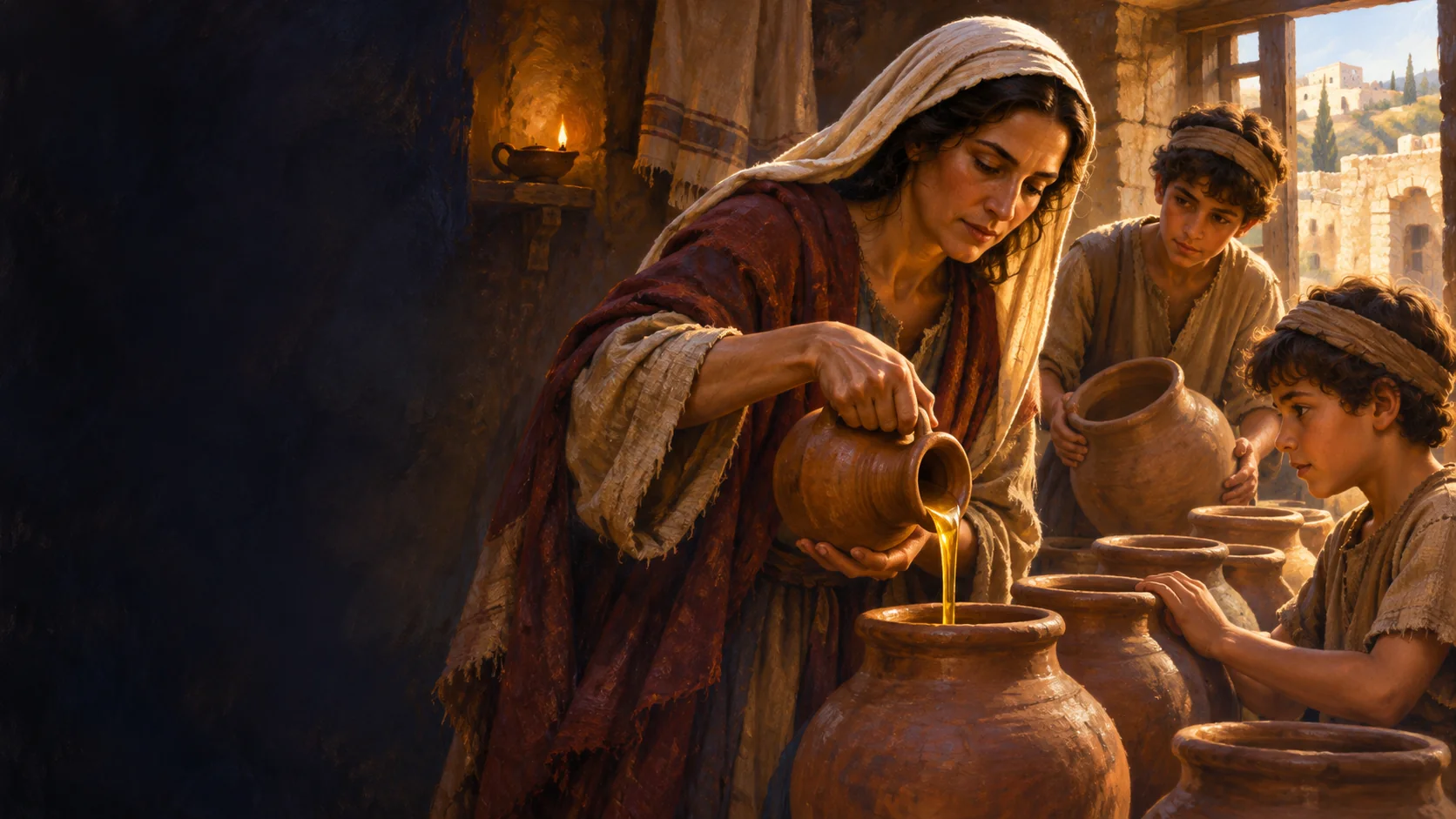
A widow of one of the prophets tells Elisha that a creditor is coming to take her two sons as servants because of the family debt. Elisha asks what she has in the house. She answers that she owns nothing except a small jar of oil, and he tells her to borrow as many empty containers as possible from her neighbors.
Behind a closed door, the widow pours from her small jar while her sons bring each borrowed vessel. The oil continues flowing until every container is full. Elisha tells her to sell the oil, pay the debt, and use what remains to support herself and her sons. The family's overlooked resource becomes enough through shared help and faithful action.
Moral and ethical guidance
Moral compass
Asking for help is not failure, and overlooked resources can become meaningful when community creates capacity.
A practice for the present
Resilience practice
Name what remains, borrow the containers you lack, and take the next practical step in private rather than performing the crisis.
The wider spiritual narrative
The larger thread
Elisha's ministry reveals divine concern for households threatened by poverty and exploitation.
What available resource needs more capacity and community around it?
Pause before answering. Notice the first honest response, then name one small action that would embody it.
Your private reflection
Notes on The Widow's Oil
Loading your saved note…